
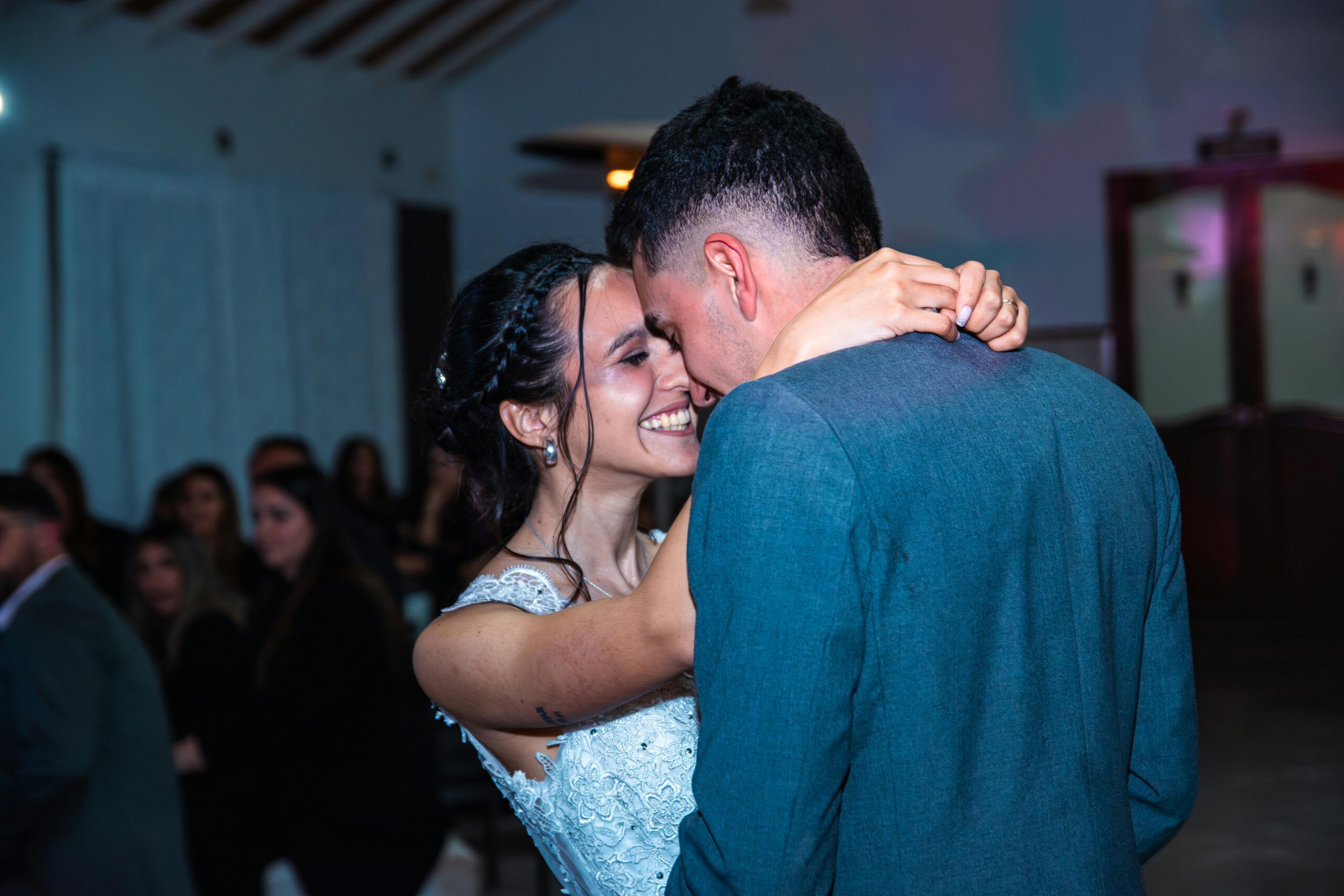
First Dance Photography Tips: Capture Emotion in Low Light Every Time
The first dance is three minutes of pure, unscripted emotion. The couple is completely absorbed in each other, the room glows with warm ambient light, and everyone is watching. Then the DJ dims the venue lights even further, a spotlight hits the dance floor, and your heart rate spikes because you know what is coming next — a technically brutal shot that has to be perfect.
First dance photography tips are everywhere online, but most stop at “raise your ISO.” That is not enough. Real mastery here means understanding how mixed light sources interact, how to predict movement before it happens, and how to make a technically challenging exposure feel emotionally effortless to the viewer. Whether you are shooting your fifth wedding or your fiftieth, this guide gives you the exact settings, techniques, and mindset shifts that separate sharp, emotional first dance images from blurry, flat disappointments. Let us get into it.
1. Understand the Low-Light Environment Before You Shoot
Walk the venue during cocktail hour and study the light. The single biggest factor in first dance photography success is preparation, not luck.
Most reception venues use three competing light sources during the first dance: a single overhead spotlight, warm ambient uplighting along the walls, and sometimes colored DJ wash lights that cycle through hues every few seconds. Each one affects your white balance and exposure differently, and they rarely cooperate with each other.
How to Read Mixed Light Sources Quickly
Arrive at the reception space before dinner ends. Take test shots of the empty dance floor at multiple positions. Meter the spotlight directly, then meter the ambient uplighting separately. The difference is often two to three stops of light. That gap tells you whether you can rely on available light alone or whether you need to introduce your own flash.
Pay attention to the color temperature of each source. Tungsten uplights typically read around 2700–3200K. DJ spotlights often run cooler at 4000–5600K depending on the fixture. If you set a fixed white balance, one light source will render correctly and the other will look wrong. Shooting in RAW gives you the flexibility to correct this in post, but understanding the scene first saves you hours at the editing desk.
Also note where the venue ceiling is. Low ceilings are your friend when bouncing flash. High cathedral ceilings or exposed-beam barn ceilings kill bounce flash entirely, forcing you to modify your approach. Check for pillars, doorways, and guest tables that create natural frames — these become compositional assets in the moment.
Talk to the venue coordinator about whether the DJ uses a follow spot or a fixed overhead. A follow spot that tracks the couple is ideal because the light is always on them. A fixed overhead means the couple will drift in and out of your best light, and you need to anticipate those moments rather than react to them.
2. Camera Settings That Actually Work for First Dance Photography
The right camera settings for first dance photography are not a single universal recipe — they shift based on your available light, but there is a proven starting framework you can adapt on the fly.
Start with your aperture at f/1.8 to f/2.8 if you are shooting with a fast prime or a 70–200mm f/2.8. This lets in the maximum available light and creates the subject separation that makes first dance images look cinematic. Yes, you sacrifice depth of field, but a sharp subject against a softly blurred reception hall is almost always more powerful than a tack-sharp scene where the couple competes with every table centerpiece in the background.
The ISO and Shutter Speed Balancing Act
Set your ISO between 1600 and 6400 depending on your camera body’s high-ISO performance. Modern full-frame cameras — Sony A7 series, Nikon Z6 III, Canon R6 Mark II — handle ISO 3200 with impressive cleanliness. APS-C shooters should aim to stay at or below ISO 3200 to keep noise manageable.
Shutter speed is where photographers make their biggest first dance mistake. Dropping to 1/30s to let in more light sounds logical, but a slow-dancing couple moves more than you think. Their hands shift, their heads turn, and a 1/30s shutter turns that movement into motion blur that destroys the image. Start at 1/100s minimum for a sharp freeze. If the couple is spinning or dipping, push to 1/200s or faster.
A useful mental framework here is an adaptation of the Sunny 16 rule for indoor events: in very low venue light with a spotlight, treat the spotlight as your “sun” and expose for it at ISO 3200, f/2.8, 1/125s. Adjust from that baseline rather than guessing from scratch every time you move around the room.
Always shoot RAW. JPEG processing in-camera crushes shadow detail and clips highlights, both of which you need to recover during the first dance edit. RAW preserves that latitude.
3. Flash Techniques That Add Light Without Killing the Mood
You can absolutely use flash during the first dance — the key is making it invisible. Heavy, direct on-camera flash is the fastest way to flatten emotion and make your couple look like they are being interrogated rather than dancing.
The most reliable technique is rear curtain sync, also called second curtain sync. This fires the flash at the end of the exposure rather than the beginning. When you combine it with a shutter speed of 1/30s to 1/60s, the ambient light paints a motion trail from the couple’s movement, and then the flash freezes them sharply at the end of the exposure. The result is an image that looks energetic and alive rather than frozen and flat. It communicates movement even in a still photograph.
Bounce Flash and Off-Camera Flash Setups
If you have a low enough ceiling, bounce your flash at 45 degrees behind you. This spreads the light, softens shadows, and makes the illumination look more like ambient venue light than a direct strobe hit. Use a flash modifier like a Magmod Sphere or a simple bounce card to further diffuse the output. Dial your flash down to -1 to -2 EV so it fills shadow rather than overpowering your ambient exposure.
For a more dramatic and editorial look, place an off-camera speedlight on a stand behind the couple at a 45-degree angle, triggered wirelessly. This creates a rim light that separates the couple from the background and adds depth. Use it at low power — you want a glow, not a beacon. This technique works especially well in dark venues where the couple would otherwise merge into the background.
Some photographers use a second shooter with a handheld flash to provide a side fill light. Communicate clearly with your second shooter: they should react to you, not shoot independently during these moments, so you are not both firing flash from the same angle simultaneously.
4. Composition and Positioning Strategies for Maximum Emotion
Where you stand during the first dance determines what emotion you capture. Movement around the room is just as important as your camera settings.
Start wide. Get an establishing shot that shows the couple on the dance floor with the room around them — guests watching, candles glowing, the whole atmosphere. This is your contextual image and it tells the story of the event. Then move closer. Get to a medium shot at chest height that shows the couple from the waist up. Then get close enough that their faces fill the frame. You are building a visual narrative: setting, moment, emotion.
Low Angles, High Angles, and the Detail Shot
Drop to one knee and shoot upward toward the couple with the reception lighting behind them. This angle makes them look larger than life and places the warm ambient glow of the room in your background rather than a wall or a DJ booth. The uplighting creates a natural halo effect that reads as romantic without any additional manipulation.
Shoot from behind a guest’s shoulder occasionally. This places the viewer inside the moment as a witness rather than as an outside observer. It adds intimacy and documentary authenticity that couples respond to deeply when they review their gallery.
Do not ignore the detail shots: intertwined hands, a tear on a cheek, closed eyes pressed against a forehead. These images often become favorites in the final gallery because they isolate singular emotional truths. Use a 85mm or 100mm macro to isolate these details without physically crowding the couple during their moment.
Anticipate the dip. Most couples dip at least once. Watch the lead partner’s body language — a slight shift of weight and a change in hand position usually signals a dip is coming ten to fifteen seconds out. Pre-position yourself low and to the side so you are ready when it happens.
5. How to Capture Authentic Emotion, Not Just Sharp Exposures
Technical perfection without emotional truth produces technically perfect photographs that nobody hangs on their wall. Emotion is the entire point of first dance photography tips, and it requires a different kind of attention.
Stop looking at your LCD screen. Every second you spend chimping during the first dance is a second you are not watching the couple. Train yourself to trust your settings — set them before the song begins, verify with one test frame, and then commit to watching the people rather than the histogram.
Reading the Couple’s Emotional Cues
Every couple communicates differently during the first dance. Some laugh nervously. Some cry immediately. Some are completely stoic and their emotion shows only in their eyes when they look at each other. Learn to read which type of couple you have during the portraits session earlier in the day. That reading tells you where to focus your lens during the first dance.
The most emotionally resonant moments during a first dance are almost never the middle of the song. They happen in the opening ten seconds when the song starts and reality hits, and in the final ten seconds when the couple knows the moment is ending. Be especially alert and especially ready at those bookend moments.
Shoot continuously during those peak emotional windows. Use your camera’s continuous high-speed burst mode — not to spray and pray, but to capture the exact peak of an expression. Human faces move through micro-expressions in fractions of a second. A burst of five to eight frames at a critical moment gives you the peak smile, the peak tear, the peak connection rather than the frame just before or just after it.
Include the guests in the periphery occasionally. A mother wiping tears in the background while the couple dances in the foreground is a layered image that tells multiple stories simultaneously. These environmental emotion shots elevate a gallery from documentation to storytelling.
6. Post-Processing First Dance Photos for Maximum Impact
The edit is where technically correct first dance images become emotionally unforgettable ones. Your post-processing approach should enhance the mood you felt in the room, not manufacture one that was not there.
Start with white balance. Because of those competing light sources, you will likely need to use selective color correction rather than a global white balance shift. In Lightroom, use the HSL panel to desaturate the magenta cast from DJ lights while preserving the warm amber tones from the uplighting. This keeps skin tones natural while cleaning up the background color contamination.
Tonal Adjustments and Noise Reduction for High-ISO Files
High-ISO files from the first dance need thoughtful noise reduction. Lightroom’s AI Denoise tool is genuinely impressive at ISO 3200–6400 — apply it as the first step before any other adjustments to preserve the most detail. Avoid over-sharpening after noise reduction, as this reintroduces a crunchy, artificial texture that reads as low quality.
For tonal processing, lift the shadows gently to recover detail in the darker areas of the couple’s clothing and the background. Pull the highlights down slightly to prevent the spotlight from blowing out completely. Then boost the whites just enough to add brightness and air to the image without clipping. The overall look should feel warm, dimensional, and slightly luminous — like candlelight on film.
Consider creating a consistent first dance preset that you apply as a starting point for every image in the sequence. This saves time and creates visual cohesion across the gallery. Your preset should reflect your signature style — whether that is warm and filmic, cool and editorial, or high-contrast and dramatic. Consistency across twenty first dance images reads as intentional artistry rather than varied luck.
Cull aggressively. Deliver fifteen to twenty genuinely excellent first dance images rather than sixty mediocre ones. Quality in the delivered gallery builds your reputation faster than volume ever will.
Frequently Asked Questions About First Dance Photography
What is the best lens for first dance photography in low light?
A fast prime lens between 35mm and 85mm at f/1.8 or f/1.4 is ideal for first dance photography in low light. The 50mm f/1.8 is a favorite for its versatility and affordability. A 70–200mm f/2.8 zoom gives you reach for detail shots without getting physically close to the couple during their intimate moment.
Should I use flash during the first dance?
Yes, but use it subtly. Bounce flash or rear curtain sync flash adds necessary light without the harsh direct-flash look. Set your flash to -1 or -2 EV so it fills shadows rather than overpowering ambient light. Many professional photographers use a combination of available light and fill flash to achieve a natural but properly exposed result.
What ISO should I use for first dance photography?
Start at ISO 1600 and increase to ISO 3200 or 6400 as needed depending on your venue’s light level and your camera body’s performance. Full-frame cameras handle high ISO better than crop sensors. Always shoot RAW so you can manage noise in post-processing without sacrificing image detail in-camera.
How do I avoid blurry first dance photos?
Keep your shutter speed at 1/100s minimum for slow dancing couples, and increase to 1/200s or faster during spins and dips. Blur is almost always a shutter speed problem, not an ISO problem. If your images are blurry despite a fast shutter speed, check that your image stabilization is turned on and that your autofocus is actively tracking the subject.
What is rear curtain sync and why does it help first dance photos?
Rear curtain sync fires your flash at the end of a long exposure instead of the beginning. This records motion blur from ambient light during the exposure and then freezes the subject sharply with the flash at the end. The result shows movement and energy while keeping the couple sharp — a technique that makes first dance images look dynamic and alive.
How do I handle colored DJ lights during the first dance?
Shoot in RAW and use selective color correction in post to neutralize problematic hues without globally shifting white balance. During the shoot, try to time your frames when the DJ lights are in a neutral or warm phase rather than a heavily saturated color cycle. Communicate with the DJ before the first dance to ask if they can hold a warmer, steadier light during the song.
Conclusion
First dance photography sits at the intersection of technical discipline and human sensitivity. The settings matter — your ISO, your shutter speed, your flash technique — but they are only the foundation. What elevates a first dance gallery from competent to extraordinary is your ability to read the room, anticipate emotion, and be in the right position at the right moment with a camera that is already configured to capture it.
Practice these first dance photography tips at every reception you shoot, even when the pressure is off. Build muscle memory for your low-light settings. Experiment with rear curtain sync before you rely on it at a paid event. Scout every venue like you are preparing a military operation.
The couples who hire you are trusting you with one of the most significant three minutes of their lives. That trust deserves your full technical preparation and your full emotional attention simultaneously. When both are present, you will capture images they will look at for the rest of their lives.
Want more wedding photography tutorials like this? Bookmark this guide and share it with a fellow photographer who is preparing for their first wedding season.