
Drone Wedding Photography: What You Need to Know Before You Fly
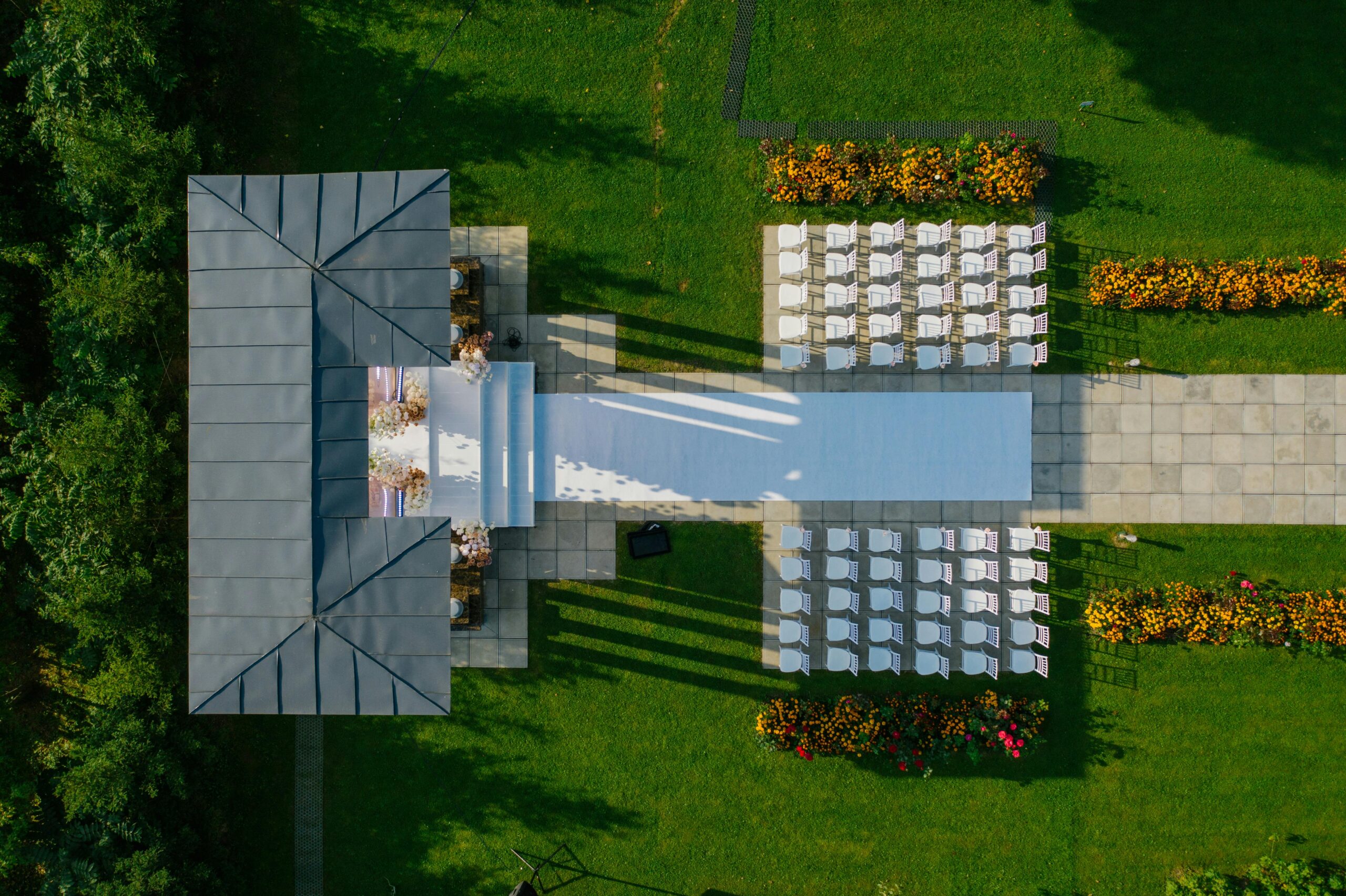
Drone wedding photography has completely changed how we tell love stories from above. That sweeping aerial shot of a bride and groom standing in a sun-drenched field, the top-down symmetry of a ceremony aisle, the dramatic reveal of a clifftop venue — none of that was possible a decade ago without a helicopter. Today, a compact drone fits in a backpack and delivers cinematic frames that make clients cry happy tears when they see the gallery. But here’s the hard truth: drone wedding photography is not as simple as unboxing a DJI and hitting record. Regulations, venue restrictions, safety protocols, and technical skill all stand between you and those stunning aerials. Whether you are considering adding drone services to your packages or you have already flown a few weddings and want to sharpen your approach, this guide covers everything — from FAA certification to the exact camera settings that produce jaw-dropping results. Let’s get you ready to fly with confidence.
Understanding FAA Regulations and Certifications for Wedding Drone Work
If you are getting paid to fly a drone at a wedding in the United States, you are legally required to hold an FAA Part 107 Remote Pilot Certificate. Full stop. Flying commercially without it exposes you to fines up to $32,666 per violation — a number that will ruin any wedding budget conversation fast.
The Part 107 certification process is more accessible than most photographers expect. You study aeronautical knowledge, pass a 60-question multiple choice exam at an FAA-approved testing center, and register your drone with the FAA for a small fee. The exam covers airspace classifications, weather interpretation, emergency procedures, and crew resource management. Study resources like the FAA’s official study guide, Sporty’s Pilot Shop drone course, and UAG’s practice tests are widely recommended by working aerial photographers.
Airspace Authorization: LAANC and the Drone Zone
Passing Part 107 does not automatically clear you to fly everywhere. Many wedding venues fall within controlled airspace near airports or in restricted zones. You need real-time airspace authorization through the FAA’s Low Altitude Authorization and Notification Capability system, known as LAANC. Apps like AirMap, Aloft (formerly Kittyhawk), and the FAA’s own DroneZone integrate LAANC and allow you to request authorization — sometimes instantly, sometimes within 24 hours.
Always check the airspace at your venue at least one week before the wedding. Rural barn venues, vineyard estates, and coastal locations can surprise you with proximity to small regional airports or military training routes. Build a pre-flight checklist that includes a B4UFLY app scan, a LAANC authorization request, and a note of the nearest hospital helipad — because helipads create temporary flight restrictions without warning.
Beyond federal rules, individual states and municipalities layer their own drone ordinances on top. California, for example, has strict privacy laws that affect low-altitude flight over private gatherings. Know your local rules before every single job.
Drone Wedding Photography Gear: Choosing the Right Equipment
The best drone for wedding photography balances portability, image quality, and wind resistance — because wedding days do not pause for gusts. The DJI Mini 4 Pro, DJI Air 3, and DJI Mavic 3 Pro are the three platforms most frequently used by professional wedding drone photographers right now.
The DJI Mini 4 Pro weighs under 249 grams, keeping it below the threshold that triggers stricter FAA registration rules in many categories. It shoots 4K at up to 100fps and captures 48MP stills in RAW format. For photographers who want to stay nimble and avoid venue weight restrictions, it is the go-to choice. The DJI Air 3 adds a dual-camera system — a wide and a medium telephoto — giving you compositional flexibility without swapping drones mid-ceremony.
Essential Accessories Every Wedding Drone Pilot Needs
Battery management is the biggest operational challenge in wedding drone photography. A single DJI Mavic 3 Pro battery lasts roughly 43 minutes in ideal conditions, but real-world wedding flying — with takeoffs, hover shots, and repositioning — often burns through a battery in 20 to 25 minutes. Bring a minimum of four fully charged batteries per wedding, and carry a car inverter or portable power station for on-site charging between sessions.
Other must-have accessories include ND filters (ND8, ND16, ND64 for sunny outdoor ceremonies), a signal booster for venues with heavy Wi-Fi interference, propeller guards for flying near guests, a landing pad to protect the camera gimbal from grass and debris, and a hard-shell carrying case for travel. Keep a printed copy of your Part 107 certificate and airspace authorization on your person at every shoot — venue managers and curious guests will ask.
For video-focused shooters, invest in DJI’s RC Pro controller with its built-in bright screen. Squinting at a phone display in direct sunlight during a golden-hour first look is a rookie problem that costs you money in retakes.
Camera Settings and Techniques for Stunning Aerial Wedding Shots
Great drone wedding photography is built on deliberate camera settings, not auto mode. Treat your drone camera the same way you treat your mirrorless body — with intention and technical control.
For still photography in bright outdoor conditions, apply the Sunny 16 rule as your starting baseline: ISO 100, aperture f/16 (or your drone’s sharpest aperture, typically f/2.8 on the Mavic 3 Pro), and shutter speed matching your ISO at 1/100s. Then dial in from there based on your histogram. Most drone cameras have a fixed aperture with a variable ND filter system, so lean on ND filters to control exposure rather than boosting ISO.
The 180-Degree Shutter Rule for Cinematic Drone Video
If you are capturing drone wedding video — and most clients expect it — the 180-degree shutter rule is non-negotiable for natural motion blur. Set your shutter speed to double your frame rate. Shooting 4K at 24fps? Your shutter is 1/48s (round up to 1/50s). Shooting 60fps for slow-motion playback? Shutter sits at 1/120s. Without an ND filter in bright daylight, hitting these shutter speeds forces you into overexposure territory. Stack your ND filters accordingly — typically ND16 on an overcast day and ND64 under direct noon sun.
For dramatic reveal shots — the slow pull-back from the couple during vows, the rising orbit around the first dance — use Cine mode on DJI systems to slow your stick inputs and eliminate jerky movements. Practice the Dronie move (backward and upward simultaneously) at home until it feels automatic, because you only get one clean take at most wedding moments.
Shoot all stills in RAW (DNG format on most DJI cameras) and video in D-Log M or HLG color profiles. D-Log M gives you roughly 12.8 stops of dynamic range on the Mavic 3 series — critical for preserving detail in a white wedding dress against a bright sky.
Navigating Venue Permissions and Wedding Day Logistics
Venue permission is the obstacle that stops more wedding drone photographers than any other. Many historic estates, national parks, beaches, and hotel properties prohibit drone flight entirely. Asking for permission the day of the wedding is a mistake that will embarrass you in front of your clients.
Contact the venue coordinator at least four to six weeks before the wedding. Send a formal written request that includes your Part 107 certificate number, your drone’s registration number, your liability insurance certificate (more on that below), a brief description of where and when you plan to fly, and your safety protocol. Venues respond far more positively to professionalism than to a casual verbal request.
Building a Drone Shot List With Your Clients
Drone wedding photography works best when it is integrated into the full wedding timeline — not treated as a bonus add-on that happens to be happening nearby. During your pre-wedding consultation, walk clients through a realistic drone shot list. Key aerials to discuss include: a venue establishing shot on arrival, an overhead ceremony aisle shot during the processional, a couple portrait session in an open field or garden (typically 15 to 20 minutes post-ceremony), a wide reception exterior at golden hour, and a send-off aerial if the light and logistics allow.
Be honest about constraints. Wooded venues with low tree canopy make drone operation dangerous and often impossible. Tight urban venues with nearby foot traffic require prop guards and a safety spotter. Indoor receptions are completely off limits for most drones due to GPS signal loss and prop wash risk around guests.
Build a buffer of 30 minutes into the portrait session specifically for drone aerials. Rushing a battery swap or a repositioning flight because the timeline is tight produces shaky, subpar footage. Clients who see drone aerials in your portfolio expect that quality — deliver it by protecting your time.
Insurance, Liability, and Protecting Your Business
Commercial drone insurance is not optional — it is the professional standard, and most venues now require proof of coverage before they grant flight permission. A single prop strike on a guest or a hard landing on a vintage car can generate liability claims that dwarf your entire year’s drone revenue.
Two insurance models dominate the wedding drone photography market. The first is an annual hull-and-liability policy through providers like BWI Fly, SkyWatch.ai, or Global Aerospace. Annual policies typically run $500 to $1,500 per year depending on coverage limits and your drone’s value, and they provide continuous coverage for every job you fly. The second model is pay-per-flight coverage through apps like Verifly or SkyWatch.ai’s on-demand service, where you activate a policy from your phone hours before each flight. Pay-per-flight is convenient for photographers just starting out, but the per-job cost adds up quickly once you’re flying multiple weddings per month.
What Your Drone Policy Should Cover
At minimum, your commercial drone insurance policy should include: $1 million in general liability coverage (some venues require $2 million), hull coverage for physical damage to the drone itself, non-owned aircraft liability if you ever fly a client’s or colleague’s drone, and personal injury coverage. Read the exclusions carefully — many policies void coverage if you fly without your Part 107 certificate, fly in unauthorized airspace, or exceed the manufacturer’s wind rating for your specific drone model.
Store digital copies of your insurance certificate, Part 107, and airspace authorizations in a cloud folder you can access from your phone. Venue managers have asked for these documents on the morning of a wedding more times than photographers expect, and being prepared closes the conversation immediately.
Pricing Your Drone Wedding Photography Services
Drone wedding photography commands a premium, and you should price it accordingly. The market rate for adding drone coverage to an existing wedding photography package ranges from $300 to $800 as an add-on, while standalone drone videography packages from dedicated aerial operators run $500 to $2,500 depending on edit length and deliverables.
When setting your pricing, account for: the cost of gear depreciation (a DJI Mavic 3 Pro retires after roughly 400 flight cycles), insurance premiums, FAA exam and renewal costs, battery replacement cycles, the time required for airspace authorization and venue communication, and post-production time for color grading D-Log footage. Many photographers undercharge for drone work because they forget that post-production on aerial video is considerably more time-intensive than processing ground-level stills.
Structuring Drone Add-On Packages That Clients Understand
Clarity in your packaging eliminates negotiation friction. Offer two tiers: a stills-only aerial add-on (10 to 15 edited DNG exports delivered as high-resolution JPEGs) and a video add-on (a 60 to 90-second cinematic edit with licensed music, delivered as a 4K MP4). Bundle both into a premium aerial package at a slight discount to increase average order value.
Include a clear statement of what the add-on does not cover: indoor drone shots, flight in restricted airspace, flight in winds exceeding 20mph, and venues that deny permission after your written request. A client who understands these limitations before the wedding is a client who does not leave a one-star review when you cannot fly during a thunderstorm.
Revisit your pricing annually. Drone technology improves rapidly, equipment costs shift, and the market rate in your region evolves. Photographers who set their drone pricing in 2021 and never adjusted it are almost certainly undercharging in today’s market.
Frequently Asked Questions About Drone Wedding Photography
Do I need a license to fly a drone at a wedding?
Yes. If you are compensated in any way — money, trade, or exposure — for flying a drone at a wedding in the United States, you legally need an FAA Part 107 Remote Pilot Certificate. Flying commercially without it risks fines of up to $32,666 per violation. Other countries have equivalent licensing requirements, so always check your local aviation authority’s rules.
How much does drone wedding photography cost to add to a package?
Most wedding photographers charge $300 to $800 to add aerial still photography to an existing package. Standalone aerial video packages run $500 to $2,500 depending on edit length and deliverables. Pricing varies by region, experience level, and the technical complexity of each venue’s airspace and logistics.
What drone is best for wedding photography?
The DJI Mini 4 Pro, DJI Air 3, and DJI Mavic 3 Pro are the top choices among professional wedding drone photographers. The Mini 4 Pro wins on portability and regulatory simplicity. The Mavic 3 Pro delivers the best image quality with its triple-camera system and wide dynamic range in D-Log M color profile.
Can drones fly indoors at wedding receptions?
Flying a consumer drone indoors at a wedding reception is strongly discouraged and often dangerous. Most drones rely on GPS for stable hovering, which is unavailable indoors. Prop wash can disturb décor, and a loss of control near guests creates serious injury liability. A very small number of professional FPV pilots fly tethered or vision-only drones indoors, but this is highly specialized work.
What happens if the venue refuses drone permission?
If a venue denies your drone flight request, you cannot legally or ethically fly there. Be transparent with your clients as early as possible — ideally during the booking consultation — so they can factor venue drone restrictions into their venue selection. Include a clear clause in your contract that outlines this scenario and removes your liability for missing aerial shots due to venue denial.
How do weather conditions affect drone wedding photography?
Wind is the biggest weather challenge — most consumer drones have a safe operating limit of 20 to 25mph. Rain, even light drizzle, can damage unprotected electronics and voids most manufacturer warranties. Low cloud cover and fog reduce visibility and can cause GPS interference. Always check the METAR weather report for your venue’s nearest airport on the morning of the wedding and have a clear no-fly decision threshold established in your workflow.
Conclusion
Drone wedding photography is one of the most powerful tools in a modern photographer’s creative arsenal — but it rewards preparation far more than impulse. Get your Part 107 certification, lock down venue permissions early, understand your airspace, protect your business with proper insurance, and master the camera settings that turn good footage into great footage. The technical foundation is not glamorous, but it is what separates photographers who consistently deliver stunning aerials from those who show up hopeful and leave frustrated. Your clients are trusting you with irreplaceable moments from one of the most important days of their lives. When you fly with confidence, skill, and professionalism, that trust is rewarded with images that stop the scroll and referrals that grow your business. Ready to elevate your wedding work — literally? Start with your Part 107 study guide this week. The sky is waiting.