
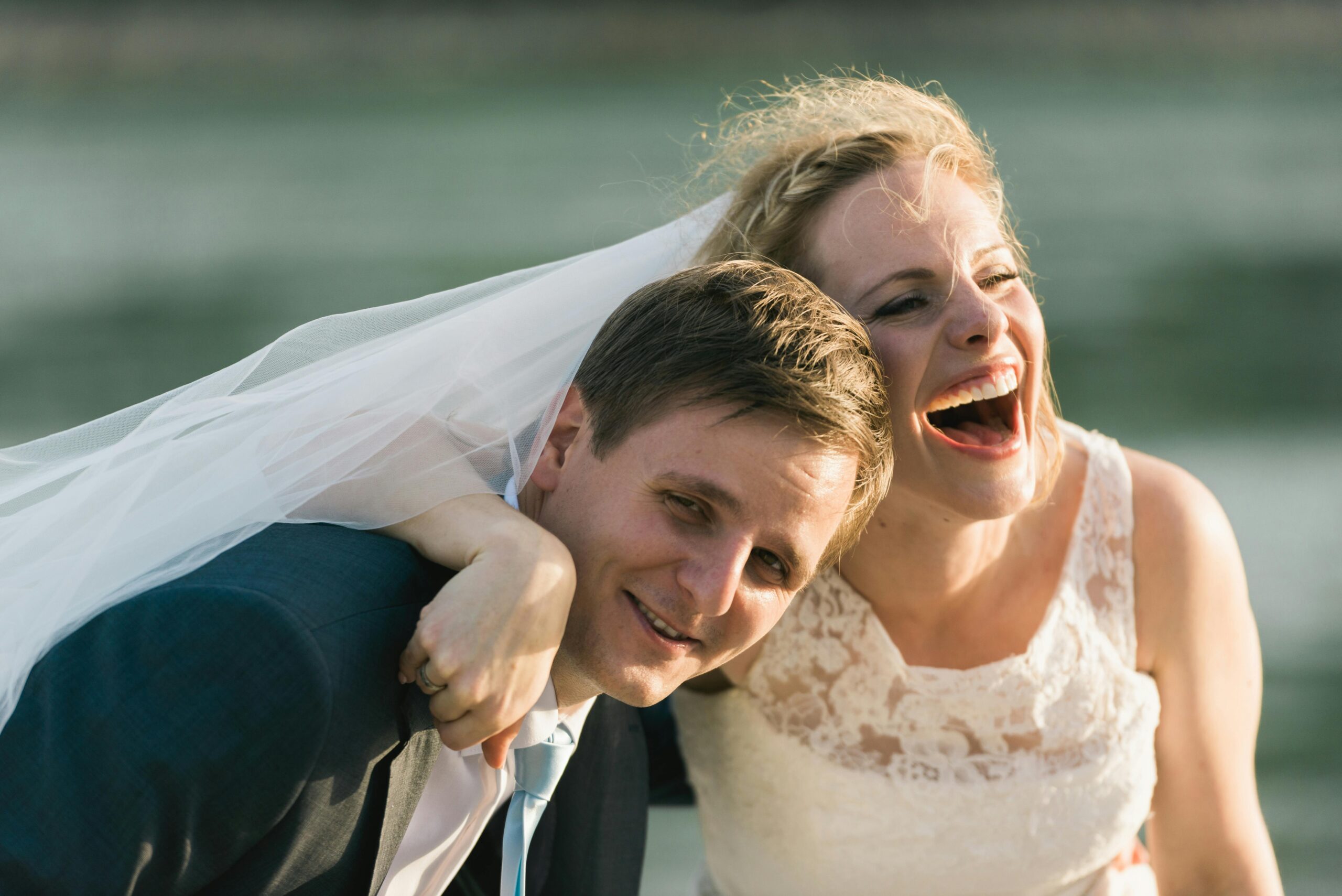
How to Capture Candid Wedding Moments Without Being Intrusive
Every wedding photographer knows the feeling: you raise your camera, the subject notices you, and that raw, unguarded moment evaporates in an instant. Learning to capture candid wedding moments without disrupting them is the single most valuable skill you can develop as a documentary-style shooter. It separates the photographers whose galleries feel alive from those whose work feels staged and stiff.
The good news? Being invisible is a craft you can actually learn. It combines the right gear choices, intentional camera settings, smart positioning, and a deep understanding of human behavior. Whether you are shooting your fifth wedding or your five hundredth, these techniques will help you document love stories the way they actually unfold — messy, emotional, and completely real. This guide walks you through everything, photographer to photographer, with no fluff and no filler.
1. Understand the Documentary Mindset Before You Touch Your Camera
Candid wedding photography starts in your head, not your camera bag. Before you can capture authentic moments, you need to shift your entire approach from directing to observing.
Most photographers trained in portrait or studio work carry a default instinct to control a scene — move this person here, adjust that chin, fix the light. At a wedding, that instinct will kill every genuine emotion before it has a chance to breathe. Documentary photography demands the opposite. Your job is to read the room, anticipate emotion, and position yourself so you are already there when the moment happens.
Adopt the Fly-on-the-Wall Philosophy
Think of yourself as a photojournalist covering a breaking story. You would never interrupt a press conference to rearrange the speakers. Apply that same discipline to a wedding. During the getting-ready window, sit quietly in a corner and let conversations flow around you. During cocktail hour, move slowly along the edges of the room. People stop noticing cameras when cameras stop demanding attention.
Study the work of photographers like Henri Cartier-Bresson, whose concept of the “decisive moment” is the philosophical backbone of every great candid image. The decisive moment is that precise fraction of a second when gesture, expression, and composition align perfectly. You cannot manufacture it. You can only be ready for it.
Spend the first 20 to 30 minutes of any new location simply watching before shooting. Note where family clusters form, identify the emotionally expressive guests, and locate the natural light sources. This reconnaissance pays enormous dividends when the real emotional peaks hit.
Build Rapport Early in the Day
The fastest route to invisible is familiar. Arrive early, introduce yourself warmly to the wedding party and key family members, and make small talk. When guests already feel comfortable with your presence, they stop performing for your lens and start ignoring it entirely. That is exactly where you want them.
2. Master the Camera Settings That Make You Invisible
The right camera settings let you work fast, quiet, and in any lighting condition — which is the technical foundation of non-intrusive candid photography.
Nothing breaks a moment faster than a photographer fumbling with dials, firing repeated bursts of harsh flash, or kneeling awkwardly because they chose the wrong focal length. Your settings need to be dialed in before the action starts, not during it.
Shoot in Silent Shutter Mode
If your camera has an electronic or silent shutter option — Sony A7 series, Nikon Z series, Canon R series, Fujifilm X-T series — use it during ceremonies and quiet emotional moments. The absence of mirror slap and shutter click is transformative. Guests will not turn around. The officiant will not glare at you. The couple will not be pulled out of their vows by the sound of your gear.
Be aware that electronic shutters can introduce rolling shutter distortion under certain artificial lighting, particularly fluorescent or LED strobes. Test your specific camera body beforehand.
Use the Sunny 16 Rule as Your Starting Baseline
For outdoor daytime receptions or garden ceremonies, start with the Sunny 16 Rule: set your aperture to f/16, your shutter speed to the reciprocal of your ISO (ISO 100 = 1/100s), and adjust from there. This gives you a reliable exposure baseline without chimping after every frame — chimping kills your situational awareness and signals to guests that you are actively working.
Recommended Settings for Low-Light Interiors
- Aperture: f/1.8 to f/2.8 — wide open to collect light without flash
- Shutter Speed: 1/125s minimum to freeze natural movement
- ISO: 3200 to 6400 on modern full-frame sensors (Sony A7IV, Nikon Z6III, Canon R6 Mark II handle this beautifully)
- AF Mode: Eye-tracking or subject-recognition AF in continuous mode
- Drive Mode: Single shot or low-speed burst (3-5 fps) to avoid sounding like a machine gun
Avoid pop-up flash entirely. If you must use artificial light, bounce a speedlight off a ceiling or wall and pair it with rear curtain sync to freeze subject motion at the end of the exposure. This technique captures ambient light trails naturally while keeping your subject sharp — a gorgeous effect for first dance frames in dimly lit ballrooms.
3. Choose the Right Lenses for Candid Distance and Compression
Your lens choice directly determines how close you need to stand to your subject — and distance is your most powerful tool for non-intrusion.
A wider lens forces you into personal space. A longer lens lets you compress distance and document emotion from across the room. Both have their place, but understanding when to use each is critical for staying invisible.
The 70-200mm Is the Candid Photographer’s Best Friend
The 70-200mm f/2.8 is arguably the most important candid wedding lens ever made. At 200mm and f/2.8, you can isolate a grandmother wiping tears from 30 feet away, with beautiful subject separation and zero intrusion. The compression flatters faces, the bokeh eliminates distracting backgrounds, and the working distance keeps you out of the emotional bubble entirely.
Use it during ceremonies from the back of the venue, during first looks from around a corner, and during speeches from beside the DJ booth. It is your long-range emotional harvesting tool.
The 35mm and 50mm for Environmental Storytelling
A 35mm f/1.4 or 50mm f/1.8 pulls you closer to the action and forces you to be physically present in the moment. These focal lengths work beautifully during getting-ready sequences, cocktail hours where you can blend into a crowd, and first dance wide establishing shots.
The 50mm in particular aligns closely with how the human eye sees, which gives your images a natural, unmanufactured quality that clients respond to emotionally. On a crop sensor body, a 35mm gives you the same field of view — keep that in mind when building your kit.
Avoid ultra-wide lenses like 16-24mm for candids unless you are going for environmental context shots. The distortion they introduce at close distances and the proximity required to fill the frame both work against non-intrusive shooting.
4. Apply the 80/20 Rule to Your Wedding Day Coverage
The 80/20 rule in photography means spending 80% of your time observing and anticipating, and only 20% actively shooting — a discipline that produces far better candid work than constant spray-and-pray firing.
This principle transforms how you move through a wedding day. Instead of raising your camera every 30 seconds and hoping something happens in front of it, you watch patiently, read body language, and fire intentionally when the moment peaks.
How to Predict Emotional Peak Moments
Certain wedding day moments are almost universally emotional. Train yourself to be pre-positioned before these moments happen:
- The first look at the end of the aisle — position yourself at a 45-degree angle to the couple, not head-on
- The father-daughter first look during getting-ready — stay in the doorway, shoot through the threshold
- The best man speech — watch the groom’s face, not the speaker
- The moment the bride’s veil is placed on her head — shoot from behind the mother’s shoulder
- The last song of the night — guests are loosened up, emotional, and completely ignoring your camera
Use the 80/20 rule in conjunction with your telephoto lens. Spend 80% of your time scanning the room from a stationary position, then raise the 70-200mm and fire when you see the emotion building. This approach produces images with genuine feeling rather than technically sharp frames of nothing happening.
What the 50/50 Rule Means for Composition
The 50/50 rule in photography refers to balancing your environmental context with your subject — roughly equal compositional weight given to the person and the world they inhabit. In candid wedding work, this means resisting the urge to always zoom tight on faces. Pull back occasionally and let the venue, the crowd, the chaos of the day become part of the frame. These environmental candids often become a couple’s favorite images precisely because they tell the full story of the day.
5. Use Strategic Positioning and Movement to Stay Invisible
Where you stand and how you move through a wedding venue determines whether guests see you as a presence or simply part of the background scenery.
Most photographers make the mistake of standing in open space where everyone can see them. Truly invisible photographers always have something behind them — a wall, a doorframe, a curtain — and they move along the perimeter of rooms rather than through the center.
The Perimeter Method
Move exclusively along the walls and edges of any room during unscripted moments. This keeps you out of the sightlines of most guests, reduces the number of people who notice your camera, and gives you architectural elements you can shoot through — doorways, window frames, floral arrangements — that add natural framing to your images.
Change your position slowly and deliberately. Sudden movements draw attention. When you need to cross a room, wait for a natural distraction — a toast, a song change, a round of applause — and move during the noise and motion.
Shooting Through Foreground Elements
One of the most effective techniques for non-intrusive candid photography is placing an out-of-focus foreground element between your lens and your subject. Shoot through a cluster of wine glasses at the bar to capture the couple behind them. Fire through a bridesmaid’s shoulder to document the flower girl. Use a candelabra as a foreground frame for the first dance.
This technique does two things simultaneously: it creates visual depth and dimension in your image, and it psychologically removes you from the subject’s direct line of sight. They see the foreground object, not the camera lens. You become part of the room’s furniture rather than an observer documenting them.
Set your focus point on the subject’s eyes, confirm your background is clean enough to tell the story, and let the foreground element blur naturally at f/2.8 or wider.
6. Build a Pre-Wedding Workflow That Sets Up Candid Success
The best candid images on a wedding day are made possible by decisions taken days and weeks before the wedding itself — from your client consultation to your shot list strategy.
Non-intrusive photography is not just a technical skill. It is a systems skill. The more structure you build around the day, the more freedom you create within it to observe and capture authentically.
The Pre-Wedding Consultation as a Candid Roadmap
During your initial client meeting, ask specific questions that reveal where the emotional density of their day will be concentrated. Who are the criers in the family? Is the groom typically reserved or expressive? Are there estranged relatives whose reunion might be emotional? Is there a grandparent attending who is unwell?
This intelligence does not make you manipulative — it makes you prepared. When you know that the groom’s late mother’s photo will be placed on a reserved seat during the ceremony, you can position yourself to document the moment his eyes find that photograph without being caught off guard.
Create a Flexible Shot List, Not a Rigid Script
Provide your couple with a must-have list framework that covers the structured formal moments — family groupings, wedding party portraits — and then explicitly communicate that the rest of the day will be documented observationally. This expectation-setting is critical. Couples who understand your documentary approach stop looking for you to direct them and start living their day, which is exactly the raw material you need.
Build buffer time into the timeline — at least 15 minutes of unstructured time after formals — so you are never rushing between setups and missing the organic moments that happen in the in-between spaces.
Scout the Venue Before the Wedding Day
Visit the venue at the same time of day as the wedding when possible. Identify where the directional light falls during the ceremony hour. Find the quiet corners where family members tend to gather. Locate the best elevated vantage point for wide establishing shots of the reception room. This venue knowledge means you spend the wedding day seeing moments rather than orienting yourself.
Frequently Asked Questions
What is the 80/20 rule in photography?
The 80/20 rule means spending 80% of your time observing, anticipating, and waiting for emotion to build, and only 20% actively shooting. This patient, intentional approach produces far stronger candid images than constant shooting. It forces you to be selective and present rather than reactive and mechanical.
What is the 50/50 rule in photography?
The 50/50 rule refers to balancing your subject and their environment within the frame — giving roughly equal compositional weight to the person and the context around them. In wedding photography, this means occasionally pulling back from tight portraits to capture subjects within the wider story of their day.
How do you take candid photos at a wedding without being noticed?
Use a telephoto lens (70-200mm) to shoot from a distance, enable silent electronic shutter mode, position yourself along room perimeters, build rapport with guests early in the day, and move slowly between positions. Shoot through foreground elements like flowers or glassware to further reduce your visual presence in the scene.
What camera settings work best for indoor candid wedding photography?
Shoot at f/1.8 to f/2.8 for maximum light gathering, maintain a minimum shutter speed of 1/125s to freeze motion, push ISO to 3200-6400 on modern full-frame bodies, use continuous eye-tracking autofocus, and enable electronic silent shutter. Avoid on-camera flash — bounce a speedlight off the ceiling if artificial light is necessary.
Is it better to use zoom or prime lenses for candid wedding shots?
Both have roles. A 70-200mm f/2.8 zoom gives you working distance and compression for emotional moments across a room. A 35mm or 50mm prime forces physical presence and produces a natural, intimate perspective. Most documentary wedding photographers carry both and switch based on the environment and the moment unfolding.
How do you capture candid moments during the wedding ceremony without disrupting it?
Position yourself at the back or sides of the venue before the processional begins. Use silent shutter mode exclusively. Work with a 70-200mm from a fixed position rather than moving during vows. Shoot the guests’ reactions, not just the couple — the emotion in the audience often tells the story more powerfully than the altar itself.
Conclusion
Learning to capture candid wedding moments without being intrusive is ultimately about respect — for the couple, for their guests, and for the authenticity of human emotion. When you combine the right mindset with sharp technical skills — silent shutters, telephoto compression, the 80/20 discipline, strategic positioning — you stop being a photographer at a wedding and start being a witness to one.
The images that will hang on your clients’ walls in 30 years are not the ones you directed. They are the ones you were patient enough to wait for and skilled enough to capture when they arrived. Build these habits into every wedding you shoot, and your work will reflect a level of emotional truth that no posed portrait can replicate.
If you found this guide useful, share it with a fellow photographer who is working on their documentary style — and feel free to bookmark it before your next wedding weekend. The moments are waiting. Go find them.