

Introduction
Every wedding photographer has lived this moment.
The ceremony starts early. The bride’s makeup runs late. Family portraits get chaotic. Sunset disappears before couple portraits happen.
Suddenly, your wedding photography timeline collapses — and so do your best shots.
Great wedding photos aren’t just about creativity or gear. They’re about planning, schedule control, and smart workflow.
When you know how to design and shoot a proper timeline, you:
- Avoid rushed portraits
- Stay calm under pressure
- Coordinate smoothly with vendors
- Capture every key moment without missing a beat
This guide will show you exactly how to shoot a wedding timeline like a pro, from preparation to reception, with step-by-step frameworks, timeline examples, and practical photography tips you can use immediately.
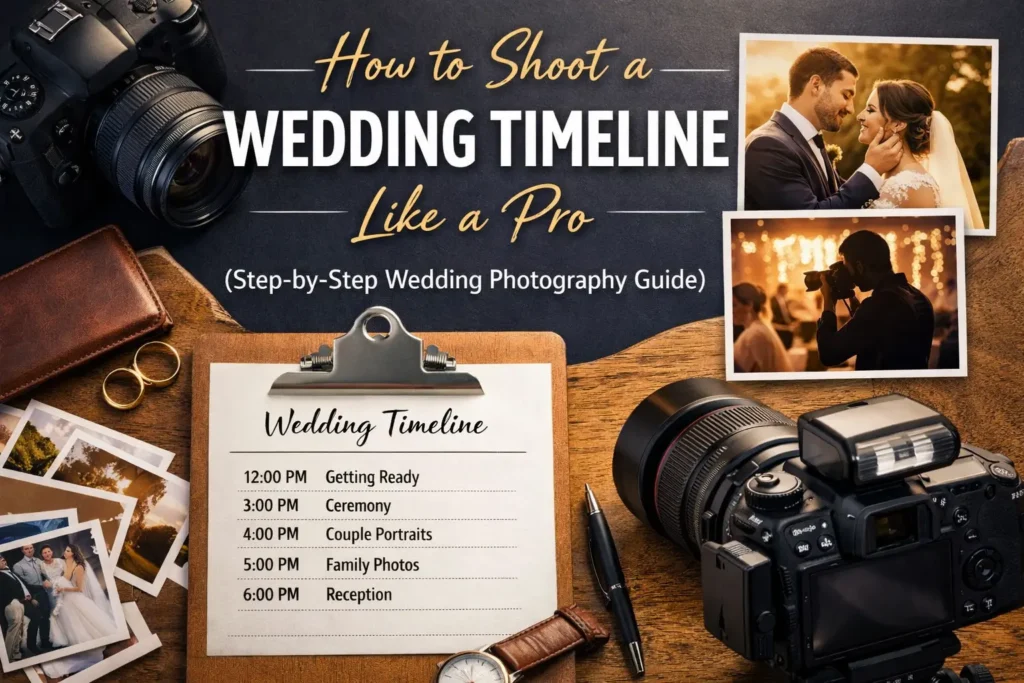
Understand the Purpose of a Wedding Photography Timeline
Before creating any schedule, you need to understand why timelines matter.
A wedding timeline is a structured plan that organizes:
- Preparation
- Ceremony
- Family photos
- Couple portraits
- Reception events
It controls the event flow and helps you predict lighting, logistics, and transitions.
Why timelines reduce stress and missed shots
Without a schedule, you’re reacting.
With a timeline, you’re anticipating.
You’ll know:
- Where to be
- When to be there
- What to shoot next
This eliminates guesswork and helps you focus on creativity.
How timelines impact lighting
Lighting changes everything in wedding photography.
Golden hour lasts 20–30 minutes. Indoor venues may dim lights early. Outdoor ceremonies might shift based on weather.
A strong shooting timeline lets you:
- Schedule couple portraits during golden hour
- Avoid harsh noon sunlight
- Plan flash or indoor setups ahead
Align expectations with couples and planners
Couples often underestimate how long photos take.
If you don’t guide them, portraits get squeezed or skipped.
Your job is to:
- Educate them
- Suggest realistic durations
- Protect photography time blocks
Professionals don’t just “follow” the timeline — they help create it.
Pre-Wedding Planning and Preparation
The real work happens before the wedding day.
Good planning equals smooth execution.
Step 1: Gather key details during consultation
Ask specific questions:
- Ceremony start time?
- Travel time between venues?
- First look planned?
- Sunset time?
- Cultural traditions or rituals?
- Number of family groupings?
These details directly affect your photography schedule.
Step 2: Build a shot list based on priorities
Not all weddings are the same.
Some prioritize:
- Traditional family photos
- Elaborate décor
- Emotional candid moments
- Editorial couple portraits
Create a photography checklist with:
- Must-have shots
- Nice-to-have shots
- Creative ideas
This helps you allocate time realistically.
Step 3: Scout the venues
If possible, visit beforehand or review photos.
Check:
- Window directions
- Indoor lighting
- Ceremony layout
- Backup rain locations
You’ll instantly know where portraits and family photos should happen.
Step 4: Coordinate with vendors
Vendor coordination prevents delays.
Connect with:
- Planner
- Makeup artists
- Videographer
- DJ
- Venue manager
Align everyone’s schedule. If the planner moves something, you adjust early — not last minute.
Build a Professional Wedding Photography Timeline
Now let’s create the actual structure.
Below is a practical framework most pros use.
Ideal timeline breakdown
| Segment | Recommended Time | Focus |
|---|---|---|
| Preparation | 60–90 min | Details, candid moments |
| First look (optional) | 20–30 min | Couple reactions |
| Couple portraits | 30–45 min | Hero shots |
| Family photos | 20–40 min | Group portraits |
| Ceremony | As scheduled | Full coverage |
| Reception details | 20–30 min | Décor before guests |
| Events (dance, speeches) | Ongoing | Storytelling |
Adjust based on wedding size and traditions.
Example: 8-hour shooting timeline
12:00 PM – Getting ready
1:30 PM – Groom prep
2:00 PM – Details + venue shots
3:00 PM – First look
3:30 PM – Couple portraits
4:15 PM – Family photos
5:00 PM – Ceremony
6:00 PM – Reception details
7:00 PM – Entrance + dinner
8:00 PM – Speeches + dances
9:30 PM – Night portraits
10:00 PM – Wrap
This structure keeps you proactive instead of scrambling.
Shoot the Timeline Efficiently on Wedding Day
A timeline is only useful if you can execute it smoothly.
Here’s how professionals handle the day.
Preparation coverage tips
Start with calm storytelling.
Capture:
- Dress and ring details
- Makeup touch-ups
- Candid laughter
- Flat lays
Use this time to warm up creatively.
Ceremony coverage strategy
Never rely on one angle.
Use:
- Wide lens for environment
- Telephoto for emotions
- Second shooter if possible
Know the order of rituals beforehand so you’re ready for key moments.
Family photos workflow
Family photos can eat your time.
Make it efficient:
- Use a printed list
- Assign a family helper
- Shoot largest groups first
- Reduce group size gradually
This keeps energy high and avoids missing relatives.
Couple portraits
This is where artistry shines.
But timing matters.
Shoot:
- Main set earlier
- Golden hour set later
Two short sessions work better than one long one.
Reception flow coverage
Focus on event flow:
- Grand entry
- Speeches
- Cake cutting
- First dance
- Open dance floor
Anticipate instead of chasing moments.
Create a Repeatable Photography Workflow
Consistency separates pros from beginners.
You need a system, not improvisation.
Suggested workflow framework
Before wedding
- Confirm schedule
- Charge batteries
- Pack checklist
- Review shot list
During wedding
- Follow timeline
- Communicate constantly
- Backup memory cards
After wedding
- Backup immediately
- Cull same day
- Edit in batches
- Deliver on time
A repeatable workflow reduces mistakes and saves hours.
Practical Wedding Photography Checklist
Use this quick-reference list on every job.
Gear
- Cameras + backups
- Lenses (wide, standard, tele)
- Flash + batteries
- Memory cards
- Timeline printout
Timeline tasks
- Confirm vendor contacts
- Check sunset time
- Allocate portrait blocks
- Plan travel buffers
Shot essentials
- Details
- Preparation
- Ceremony moments
- Family photos
- Couple portraits
- Reception highlights
Keep it simple and visible.
Common Mistakes That Ruin Wedding Timelines
Even experienced photographers slip up.
Avoid these pitfalls.
1. Underestimating portrait time
Rushed couples look stressed. Always add buffer time.
2. No lighting planning
Bad lighting kills great compositions. Schedule portraits intentionally.
3. Poor vendor communication
If planners change timing and you don’t know, you miss moments.
4. Too many family combinations
Limit to priority groups only.
5. No backup buffer
Traffic, weather, delays — always build 15–20 minutes cushion.
FAQs
How long should wedding preparation photography take?
Preparation typically needs 60–90 minutes. This allows time for detail shots, candid moments, and storytelling without rushing. Larger bridal parties or complex venues may require extra time, so build a buffer to stay relaxed and creative.
What’s the best time for couple portraits?
Golden hour, about 30 minutes before sunset, provides the most flattering natural light. Schedule your main portraits earlier and a second short session at sunset for dramatic, warm tones and softer shadows.
How do you manage large family photo sessions efficiently?
Use a pre-written list and assign a family member to gather people. Start with large groups and reduce gradually. This keeps sessions fast, organized, and prevents elders or children from waiting too long.
Should photographers create the timeline or follow the planner’s?
Collaborate with the planner but guide photography blocks yourself. Planners focus on logistics; you focus on light and coverage. Suggest realistic durations to protect essential photo time.
How much buffer time is recommended?
Add at least 15–20 minutes between major segments. Weddings rarely run on time. Buffers absorb delays and keep you calm without sacrificing important shots.
Is a first look necessary for better timelines?
Not mandatory, but helpful. A first look allows portraits and family photos before the ceremony, reducing stress later and freeing the couple to enjoy the reception without interruptions.
How do second shooters improve timeline efficiency?
Second shooters capture alternate angles and parallel moments, like groom prep or cocktail hour candids. This increases coverage and reduces time pressure on the primary photographer.
Conclusion
Great wedding photography isn’t just about talent.
It’s about planning smart timelines, coordinating vendors, and executing with a reliable workflow.
When your schedule is intentional, you:
- Stay calm
- Work faster
- Capture better moments
- Deliver consistent results
Master the timeline, and you’ll feel in control of every wedding — no matter how chaotic the day gets.