
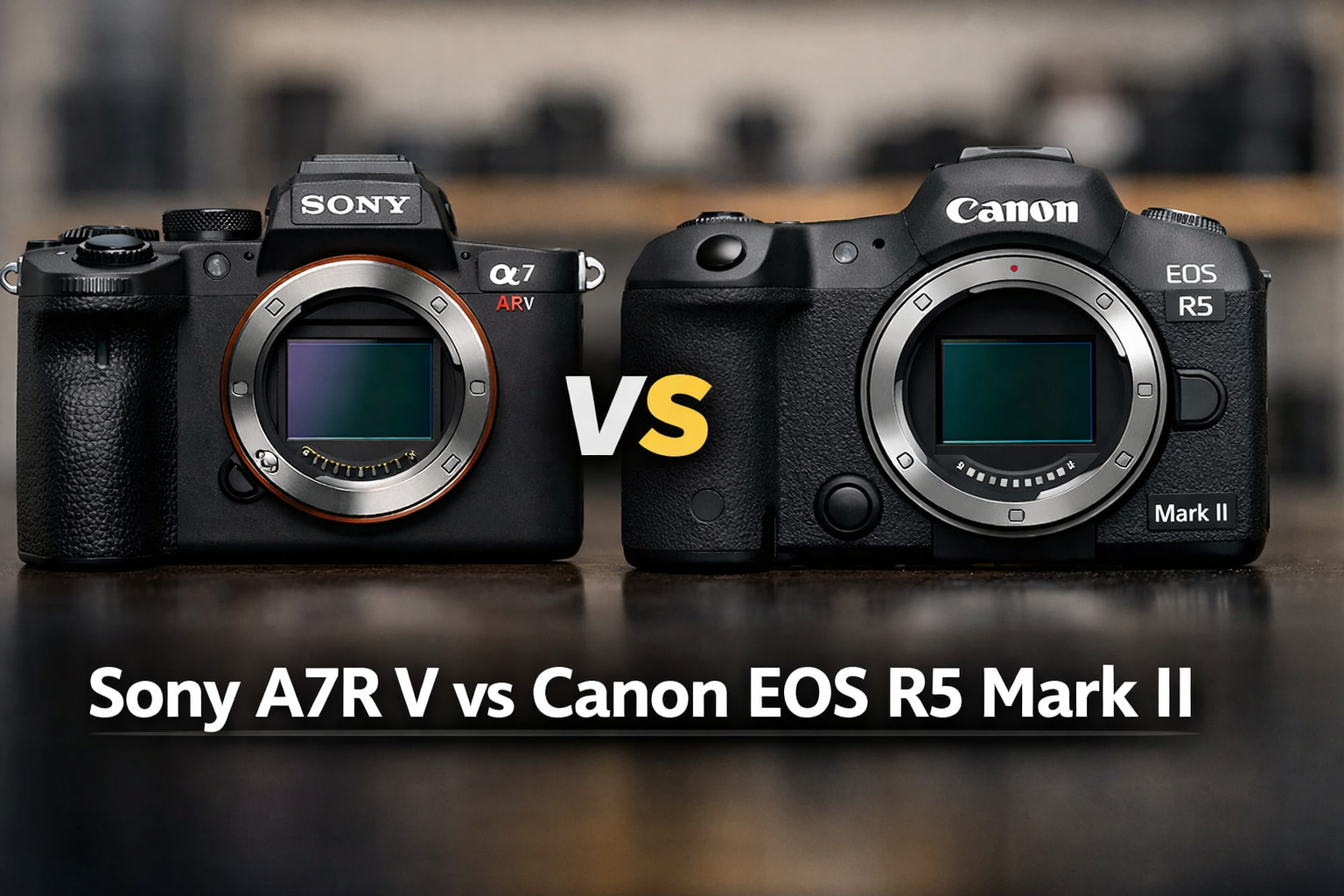
Sony A7R V vs Canon EOS R5 Mark II — if you’re choosing between these two flagship full-frame cameras, you’re already operating at the professional level.
But here’s the tricky part. This comparison isn’t just about camera specs — it’s about how well these tools support a modern photography workflow, from intelligent shot selection to post-production efficiency (see our AI photo culling techniques for wedding photographers)
Both promise exceptional image quality, lightning-fast autofocus, powerful video capabilities, and premium performance.
So which one actually makes your job easier?
Which one saves you time in post?
Which one nails focus when the moment happens once?
Which one justifies the price you’re paying?
This isn’t another spec dump.
In this Sony A7R V vs Canon EOS R5 Mark II comparison, we focus on real-world performance rather than just specifications.
Let’s break it down.
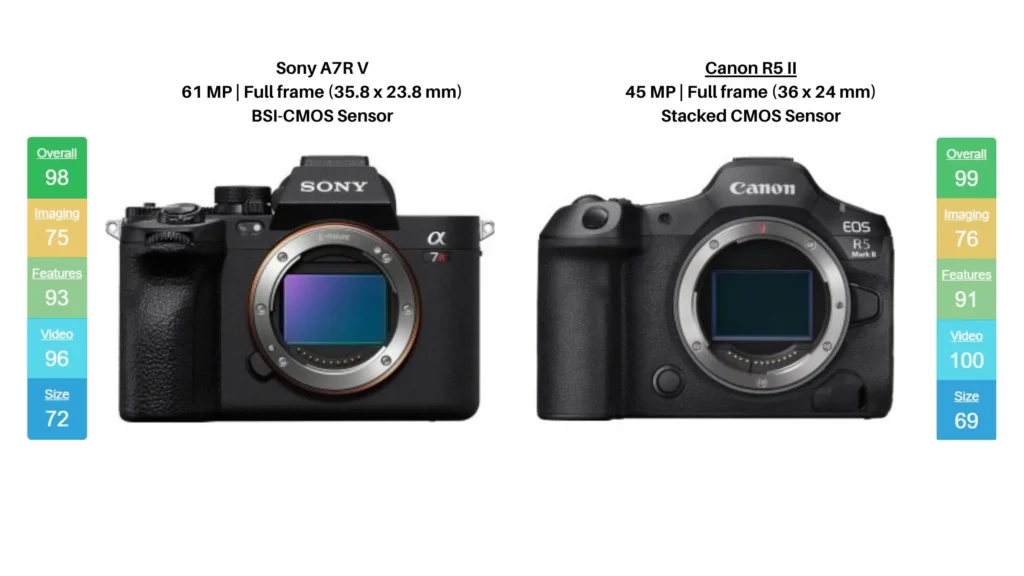
Sony A7R V vs Canon EOS R5 Mark II: Sensor & Image Quality Comparison
At the professional level, sensor performance directly impacts what you can deliver to clients — detail, dynamic range, and editing flexibility.
Sony pushes resolution to the extreme. Canon balances resolution with speed and efficiency.
Core Sensor Specifications
| Feature | Sony Alpha A7R V | Canon EOS R5 Mark II |
| Resolution | 61 MP | 45 MP |
| Sensor Type | Full-frame BSI CMOS | Full-frame CMOS (stacked design) |
| Native ISO Range | Wide | Wide |
| RAW Flexibility | Very high | High |
| File Size | Large | Moderate |
What this means in real life
Sony advantage
- Extreme detail for commercial & landscape work
- Heavy cropping without quality loss
- Large format prints
Canon advantage
- Smaller files = faster workflow
- Quicker editing & delivery
- Better balance for event shooters
If you constantly crop or shoot billboards → Sony.
If you deliver thousands of wedding photos weekly → Canon may feel more practical.
Autofocus & Performance
When it comes to speed, the Sony A7R V vs Canon EOS R5 Mark II debate becomes especially interesting for action and event photographers. If you want deeper insight into subject recognition systems and how Sony’s AI-assisted AF differs from Canon’s Dual Pixel AF, check out this hybrid autofocus breakdown from Photography Blog. Sony A7R V vs Canon EOS R5 AF Comparison (Photography Blog).
Both systems are incredibly advanced, but they behave differently.
Autofocus & Speed Comparison
| Feature | Sony Alpha A7R V | Canon EOS R5 Mark II |
| Autofocus System | AI Real-Time Tracking | Dual Pixel AF II |
| Subject Detection | Humans, animals, birds, vehicles | Humans, animals, birds |
| Burst Shooting | Fast | Faster |
| Tracking Reliability | Excellent | Excellent |
| Sports/Event Suitability | Very good | Outstanding |
Real-world feel
Sony’s AI tracking feels intelligent. It sticks to eyes and faces even in chaos.
Canon feels snappier and faster, especially for continuous bursts.
So ask yourself:
- Wildlife / erratic motion → Sony
- Sports / weddings / action bursts → Canon
Both deliver top-tier autofocus performance, but their strengths differ slightly.
Video Capabilities
Video creators often ask whether the Sony A7R V vs Canon EOS R5 Mark II offers better hybrid capabilities.
Thankfully, neither camera disappoints.
Video Features Breakdown
| Feature | Sony Alpha A7R V | Canon EOS R5 Mark II |
| Max Resolution | 8K | 8K |
| 4K Modes | Multiple oversampled options | Multiple oversampled options |
| Autofocus in Video | Excellent | Excellent |
| Heat Management | Good | Improved/very good |
| Target User | Hybrid creators | Hybrid + video-first creators |
Practical takeaway
Both offer professional video capabilities, but:
- Sony = excellent all-round hybrid
- Canon = slightly more video-focused reliability
If filmmaking is a big part of your workflow, Canon has a small edge.
Build, Handling & Ergonomics
You might shoot 8–10 hours straight.
Comfort suddenly matters more than specs.
Design & Usability Comparison
| Feature | Sony Alpha A7R V | Canon EOS R5 Mark II |
| Body Build | Weather sealed | Weather sealed |
| Grip | Deep & secure | Classic DSLR-style comfort |
| Weight | Moderate | Slightly heavier |
| Menu System | Improved Sony UI | Very intuitive Canon UI |
| EVF Quality | High resolution | High resolution |
Handling differences
Sony feels modern and compact.
Canon feels familiar and ergonomic.
This one is honestly personal preference. Try both in hand if possible.
Connectivity & Workflow
Specs don’t mention this, but workflow speed is everything for professionals.
Workflow Features
| Feature | Sony Alpha A7R V | Canon EOS R5 Mark II |
| Wi-Fi / Bluetooth | Yes | Yes |
| Tethering | Yes | Yes |
| FTP Transfer | Yes | Yes |
| File Size Efficiency | Heavy | Lighter |
| Editing Speed | Slower (large files) | Faster |
If you process thousands of images weekly, Canon’s lighter files save real time.
Time saved = money saved.
Price, Lenses & System Value
The price of a camera isn’t just the body.
It’s:
- Lenses
- Storage
- Editing hardware
- Workflow time
Investment Comparison
| Factor | Sony Alpha A7R V | Canon EOS R5 Mark II |
| Body Price | Premium | Premium |
| Lens Ecosystem | Extensive | Extensive |
| Third-party Support | Strong | Growing |
| Storage Needs | Higher | Moderate |
| Long-term Value | Detail-focused users | Speed-focused users |
Sony costs more in storage and computing.
Canon may cost less operationally over time.
Small differences add up for working pros.
Quick Decision Guide
Choose Sony Alpha A7R V if you:
- Shoot commercial, landscape, product
- Need maximum image quality
- Crop aggressively
- Prioritize detail above all
Choose Canon EOS R5 Mark II if you:
- Shoot weddings or events
- Need fast bursts
- Want balanced photo + video
- Value smoother workflow performance
This Sony A7R V vs Canon EOS R5 Mark II comparison ultimately comes down to how you work — not just specifications or reviews.
Both are exceptional.
The better camera?
It’s the one that removes friction from your workflow.